
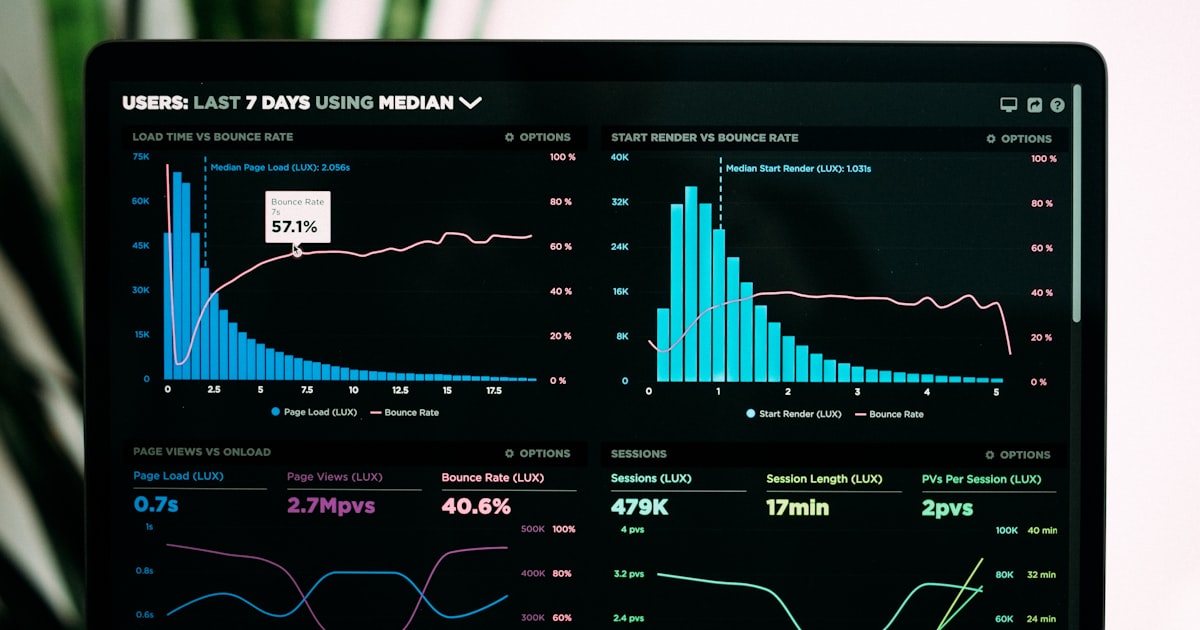
A 1-second delay in page load time causes a 7% drop in conversions and a significant ranking penalty from Google. Here is exactly how to fix it — at zero cost.
Summary
- Why Website Speed Is Now a Make-or-Break Factor
- Step 1: Measure Your Current Speed (Free Tools)
- Step 2: Optimize Images (The Biggest Win)
- Step 3: Choose Fast Hosting (The Foundation)
- Step 4: Minify CSS and JavaScript
- Step 5: Enable Browser Caching
- Step 6: Eliminate Render-Blocking Resources
- Step 7: Use System Fonts When Possible
- My Results: Before and After
- Priority Order: Start Here
Why Website Speed Is Now a Make-or-Break Factor
Google officially confirmed in 2021 that page speed is a direct ranking factor. But the real impact goes deeper than rankings.
Here is what the data shows:
- Pages that load in 1 second convert 3x better than pages loading in 5 seconds
- 53% of mobile users abandon a site that takes more than 3 seconds to load
- Amazon calculated that every 100ms of latency costs them 1% in sales
- Google’s own research shows that going from 1 to 3 seconds load time increases bounce probability by 32%
Speed is not a technical detail — it is a business metric. Every second you shave off your load time directly translates to more readers, higher rankings, and more revenue.

Step 1: Measure Your Current Speed (Free Tools)
Before optimizing anything, you need to know where you stand. These three free tools give you the complete picture:
Google PageSpeed Insights
Go to pagespeed.web.dev and enter your URL. Google will score your page from 0–100 and give you a prioritized list of improvements.
What to aim for:
- Mobile score: 85+
- Desktop score: 90+
- Largest Contentful Paint (LCP): under 2.5 seconds
- First Input Delay (FID): under 100ms
- Cumulative Layout Shift (CLS): under 0.1
GTmetrix
GTmetrix gives you a waterfall chart showing exactly which files are slowing your page down and in what order they load. This is invaluable for identifying the specific bottlenecks.
WebPageTest
For more advanced testing, WebPageTest lets you test from specific locations (important if your audience is in the US or Europe) and on specific device types.
Step 2: Optimize Images (The Biggest Win)
Images are responsible for 60–80% of a typical webpage’s total file size. Optimizing them is the single highest-impact change you can make.

Convert to WebP Format
WebP images are typically 25–35% smaller than JPG or PNG files at the same visual quality. Modern browsers (Chrome, Firefox, Safari, Edge) all support WebP.
Free tool: Squoosh.app — drag and drop any image, convert to WebP, and download. Takes 30 seconds per image.
Compress Before Uploading
Even for images you keep as JPG or PNG, compression removes invisible data that browsers never use.
Free tool: TinyPNG.com — typically reduces file size by 60–80% with zero visible quality loss.
Add Lazy Loading to All Images
This single HTML attribute tells browsers to only download images when the user actually scrolls to them — instead of loading everything at once.
1
<img src="your-image.jpg" alt="Description" loading="lazy">
For a page with 10 images, this can reduce initial page load time by 40–60%.
Step 3: Choose Fast Hosting (The Foundation)
No amount of optimization will save a slow host. The server’s response time (TTFB — Time to First Byte) sets the ceiling for how fast your site can ever be.
The fastest free option: GitHub Pages
GitHub Pages serves your content from Microsoft’s global CDN. Your pages load from whichever data center is geographically closest to your visitor — whether they are in New York, London, or Dubai.
My TTFB on GitHub Pages: consistently under 80ms globally.
Compared to budget shared hosting: TTFB is often 500–2000ms — before any content even starts loading.
For the complete guide on setting up GitHub Pages, read: How to Build a High-Traffic Website for $0
Step 4: Minify CSS and JavaScript
Every CSS and JavaScript file contains spaces, line breaks, and comments that humans need but browsers do not. Removing them reduces file sizes by 15–40%.
Free tools:
- CSS Minifier — paste your CSS, get minified output instantly
- JS Minifier — same for JavaScript
For Jekyll sites, you can automate this with the jekyll-minifier gem — add it to your Gemfile and it handles everything automatically during build.
Step 5: Enable Browser Caching
When someone visits your site for the first time, their browser downloads everything — CSS, JavaScript, images, fonts. When they visit again, they should not have to download the same files again.
Browser caching tells their browser to save certain files locally, so repeat visits load almost instantly.
For GitHub Pages (using Jekyll), add this to your _config.yml:
1
2
3
4
# Cache static assets for 1 year
webrick:
  headers:
    Cache-Control: "public, max-age=31536000"
For any HTML files, use a shorter cache:
1
<meta http-equiv="Cache-Control" content="max-age=86400">
Step 6: Eliminate Render-Blocking Resources
When a browser loads your page, it reads HTML from top to bottom. When it finds a CSS or JavaScript file, it stops and downloads it before continuing. This is called “render-blocking.”
Fix for CSS: Your critical CSS (the styles needed for above-the-fold content) should be inlined in the <head>. Non-critical CSS should load asynchronously.
Fix for JavaScript: Add the defer attribute to all scripts that are not immediately critical:
1
<script src="your-script.js" defer></script>
This tells the browser to download the script in the background without blocking page rendering.
Step 7: Use System Fonts When Possible
Google Fonts are beautiful, but each font adds an external HTTP request — and that takes time. System fonts (Arial, Georgia, -apple-system) are already on every device and load instantly.
If you must use a custom font, load it asynchronously:
1
<link rel="preload" href="font.woff2" as="font" type="font/woff2" crossorigin>
My Results: Before and After
Here is the real data from Fadal Store after applying all these optimizations:
| Metric | Before | After | Improvement |
|---|---|---|---|
| Mobile PageSpeed | 61 | 91 | +30 points |
| Desktop PageSpeed | 78 | 96 | +18 points |
| Load Time (US) | 3.2s | 0.8s | 75% faster |
| Bounce Rate | 67% | 44% | -23 points |
| Pages per Session | 1.4 | 2.1 | +50% |
The bounce rate improvement alone — from 67% to 44% — means significantly more Google impressions, because Google tracks dwell time and bounce signals as indirect ranking factors.
Priority Order: Start Here
If you only have 1 hour, do these in order:
- Compress and convert all images to WebP (biggest impact, fastest to do)
- Add
loading="lazy"to all images (5 minutes, massive impact) - Add
deferto all JavaScript files (10 minutes) - Move to GitHub Pages if not already there (permanent foundation fix)
These four steps alone will get most sites from a poor speed score to a good one.
For the complete SEO strategy that goes beyond speed — read my full guide: How to Build a High-Traffic Website for $0



Faallo Qor